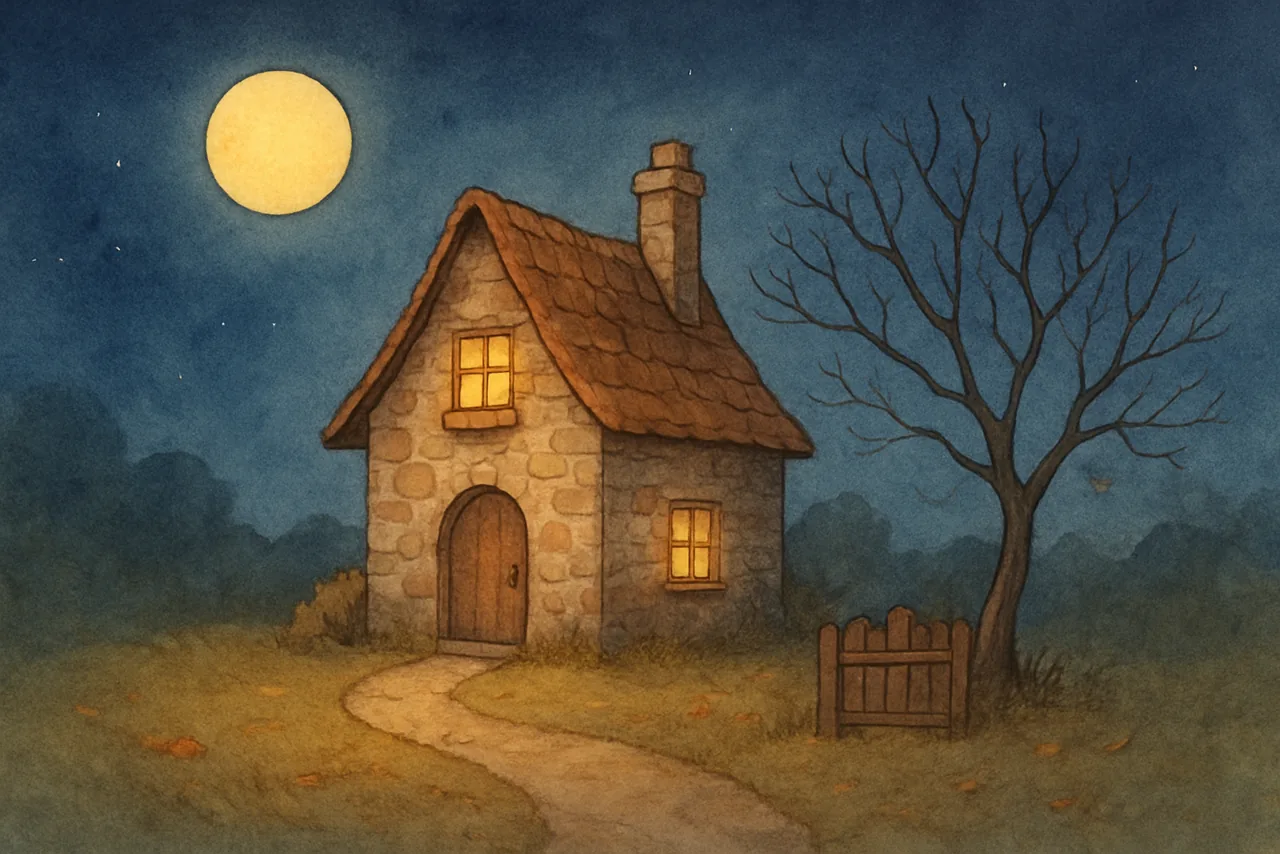
For a hundred and one years, the lighthouse at Cape Almyra had lit itself at dusk.
You could set a kitchen clock by it. The sun went down behind the salt flats, the village counted to sixty, and out on the rock the great lamp opened its eye and began to turn. One flash — then dark, dark, dark. One flash every four seconds. That was Almyra's signature, and every captain from Piraeus to the islands knew it the way you know a friend's knock at the door.
Yannis knew it best of all, because his grandfather had kept it for forty of those years, and because his bedroom window faced the sea.
Which is how he came to be the first person in the village to notice that, on the ninth of November, the lighthouse did not light.
He counted to sixty. Then to a hundred. Then, with something cold starting up under his ribs, to three hundred.
The rock stayed dark.
His grandfather was in his chair by the stove with a blanket over his knees, and his hands — the hands that had wound the clockwork twice a night for forty years — were not hands that could row anymore.
"The ferry," said the old man.
"I know," said Yannis.
The evening ferry from the islands came round the cape at half past seven, and under that stretch of water there were teeth of rock. The chart called them the Almyrákia, the little salty ones, which is a friendly name for something that has sunk eleven boats.
His grandfather lifted the key off its nail by the door. It was as long as Yannis's hand, and warm from the room.
"A hundred and forty-three steps," he said. "Count them. If you're counting, you're not frightened."
The water between the harbour and the rock is four hundred metres of black glass on a still night, and that night was still. Yannis rowed the way he had been taught — leaning back, not hauling — and the oars dipped and the sea opened and closed over them. Behind him the village lights got smaller. In front of him the tower stood up out of the dark like a chimney with no house under it.
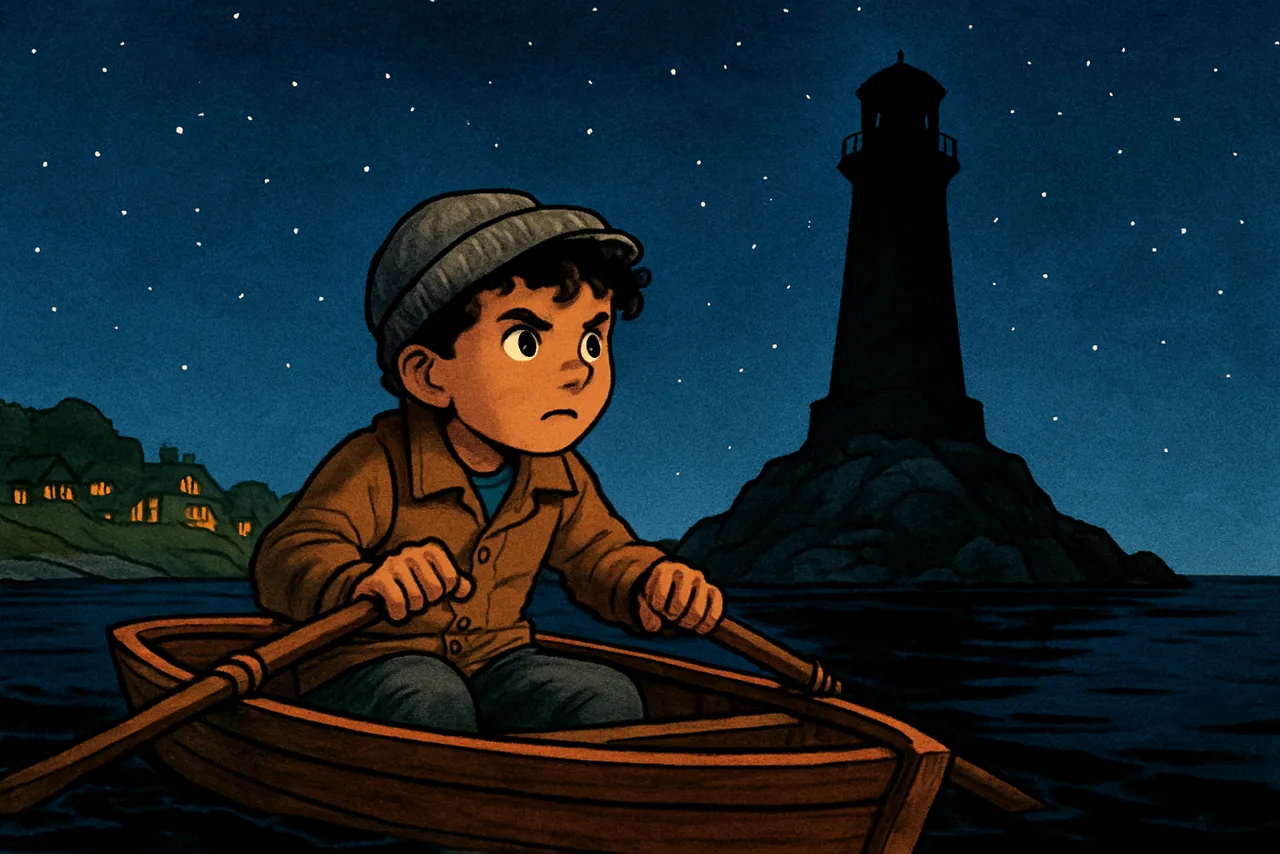
He tied up. He climbed. He counted, and at ninety-one his legs began to complain, and at a hundred and forty-three the stairs ran out and he was standing in the lamp room with the whole sky pressed against the glass.
Nothing was wrong.
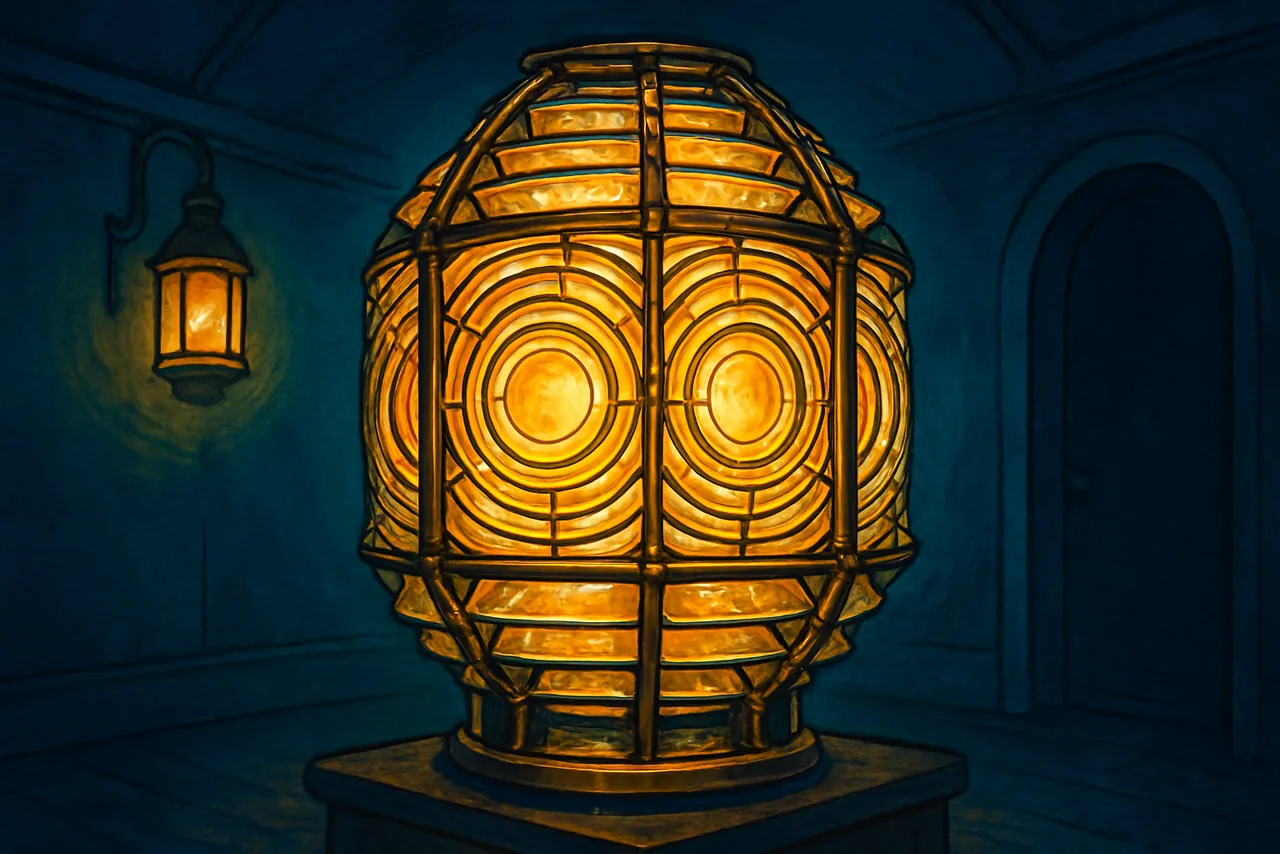
That was the strange part. The lamp was clean. The oil stood full to the line. The lens — the huge glass beehive his grandfather called the honeycomb — was cool and perfect. Yannis struck a match, lit the wick, and the light came up gold and steady, exactly as it should.
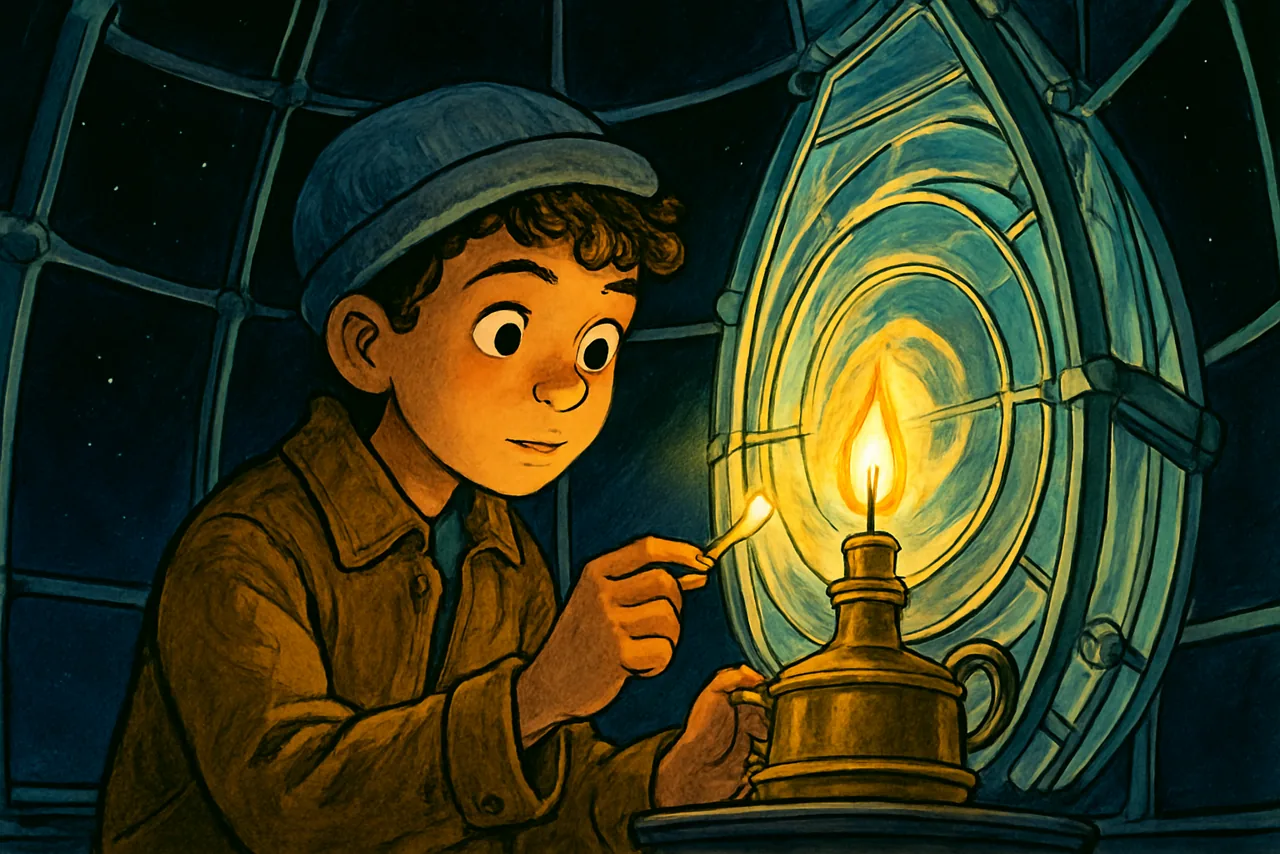
And it did not turn.
A lighthouse that does not turn is not a lighthouse. It is a lamp. From out at sea it looks like any window on the shore — a house, a hotel, a car on the coast road — and a captain who mistakes a shore light for Almyra's four seconds will put his boat exactly where the teeth are.
The lens turned by clockwork: a weight the size of a goat, hanging on a rope, falling slowly down the middle of the tower and dragging the gears round with it. His grandfather wound it twice a night. Yannis put both hands on the crank and turned, and the rope came up, and the weight came up with it — and stopped, three metres above the floor, with a soft scraping sound.
He leaned into the shaft with the lantern held out.
Wedged in the gap where the weight rode, in a hollow of the stones, was a nest: a scruffy bowl of seaweed and thread. And in the nest, blinking, were three storm-petrel chicks, grey as pocket lint, waiting for a mother who was somewhere out over the water, hunting.
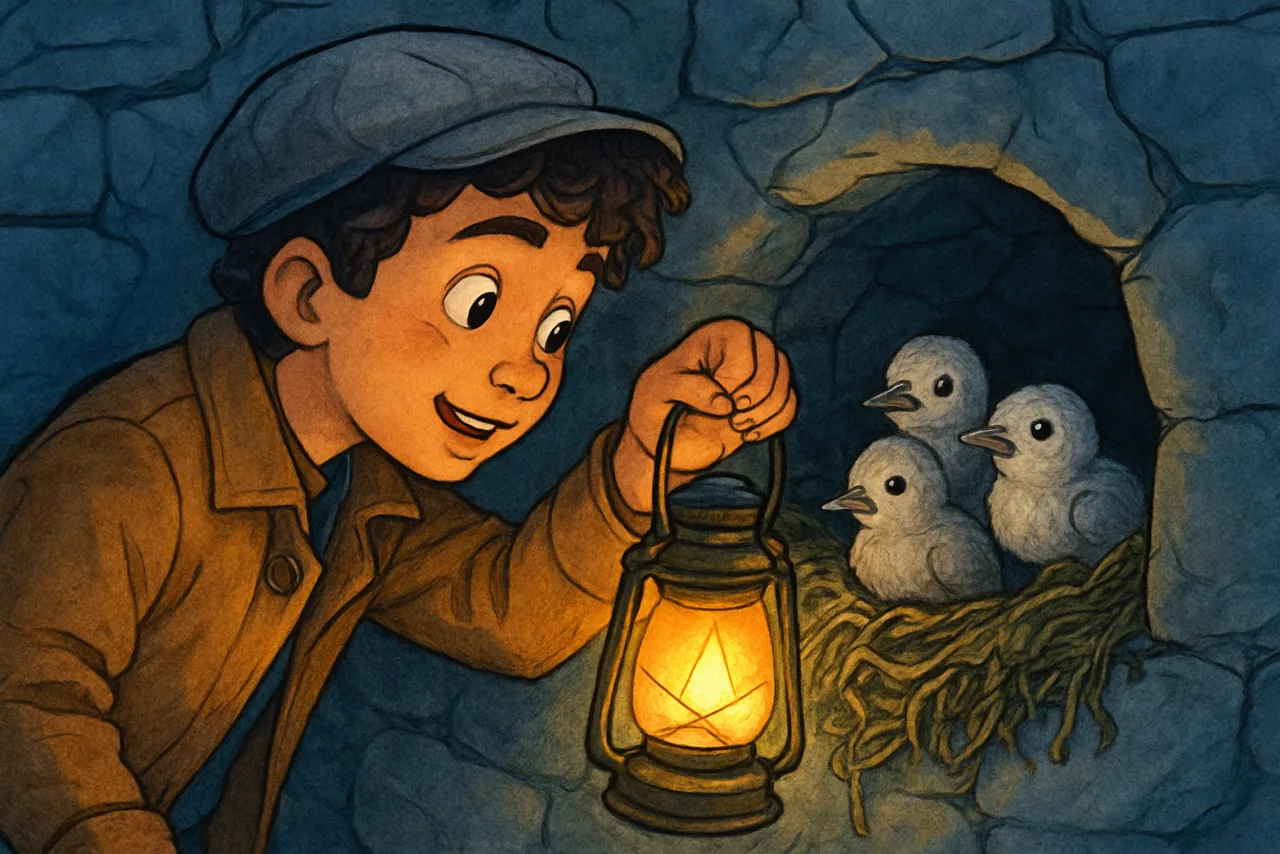
Yannis stood there for what felt like a long time.
He could pull the nest out. It would take four seconds. The weight would drop, the gears would take it, the light would swing round, and the ferry would come past the cape and find Almyra exactly where Almyra should be.
Twenty past seven.
"You can't move a nest at night," his grandfather had told him once, years ago, on this same staircase. "She won't find it in the dark. You do it at noon, and only if you must, and you put it somewhere she can see from the air."
Yannis climbed back to the lamp room, looked at the honeycomb, and understood what he was going to have to do.
He put his shoulder against the brass frame and pushed.
The lens weighed as much as a full water barrel and it moved like one — heavily at first, then, once it was going, almost willingly, floating on its bath of mercury the way his grandfather always said it did.
One flash. Then dark, dark, dark.
"One," said Yannis. "Two. Three. Four." And pushed again.
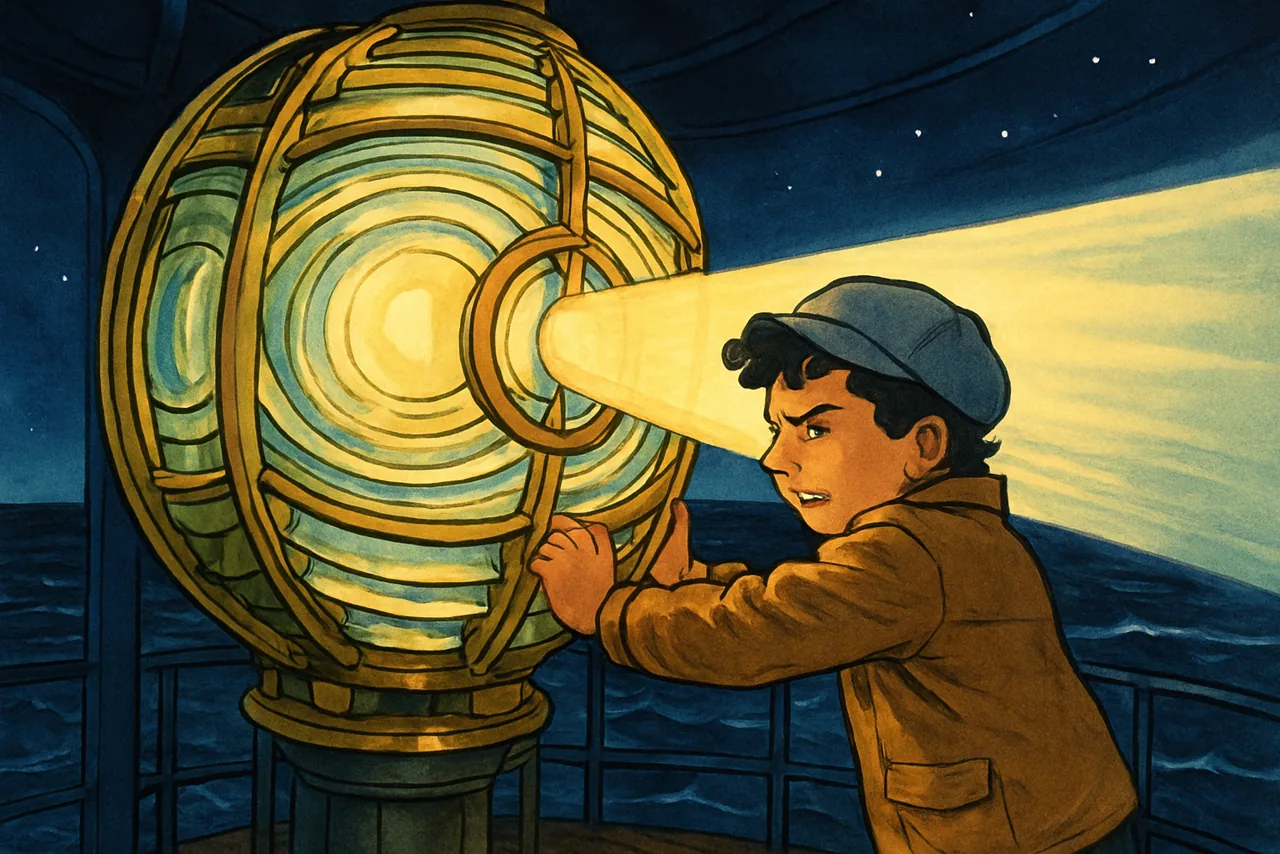
He did that for forty minutes. His shoulder went hot, then numb. His arms shook. Twice he lost count and had to guess, and guessing felt like telling a lie. Somewhere after eight the beam swept across a shape out in the black water — white, low, unhurried — and the shape leaned into the channel and slid past the Almyrákia with a hundred metres to spare, and its horn gave two short blasts, which every sailor knows means: I see you.
He kept pushing until his father's boat came out with two men and a lamp, and they took the lens between them and laughed at him and told him to sit down. He sat down on the top step and found he could not lift his arms at all.
At noon the next day, in the calm, his grandfather came out to the rock wrapped in his blanket, stood in the shaft with those old hands, and moved the nest of storm-petrels three metres to the left, onto a broad stone under the window, where a mother flying in off the sea would see it plainly.
Then the weight fell as it was meant to, and the gears took it, and Almyra remembered.
That evening the whole village counted to sixty.
One flash — then dark, dark, dark.