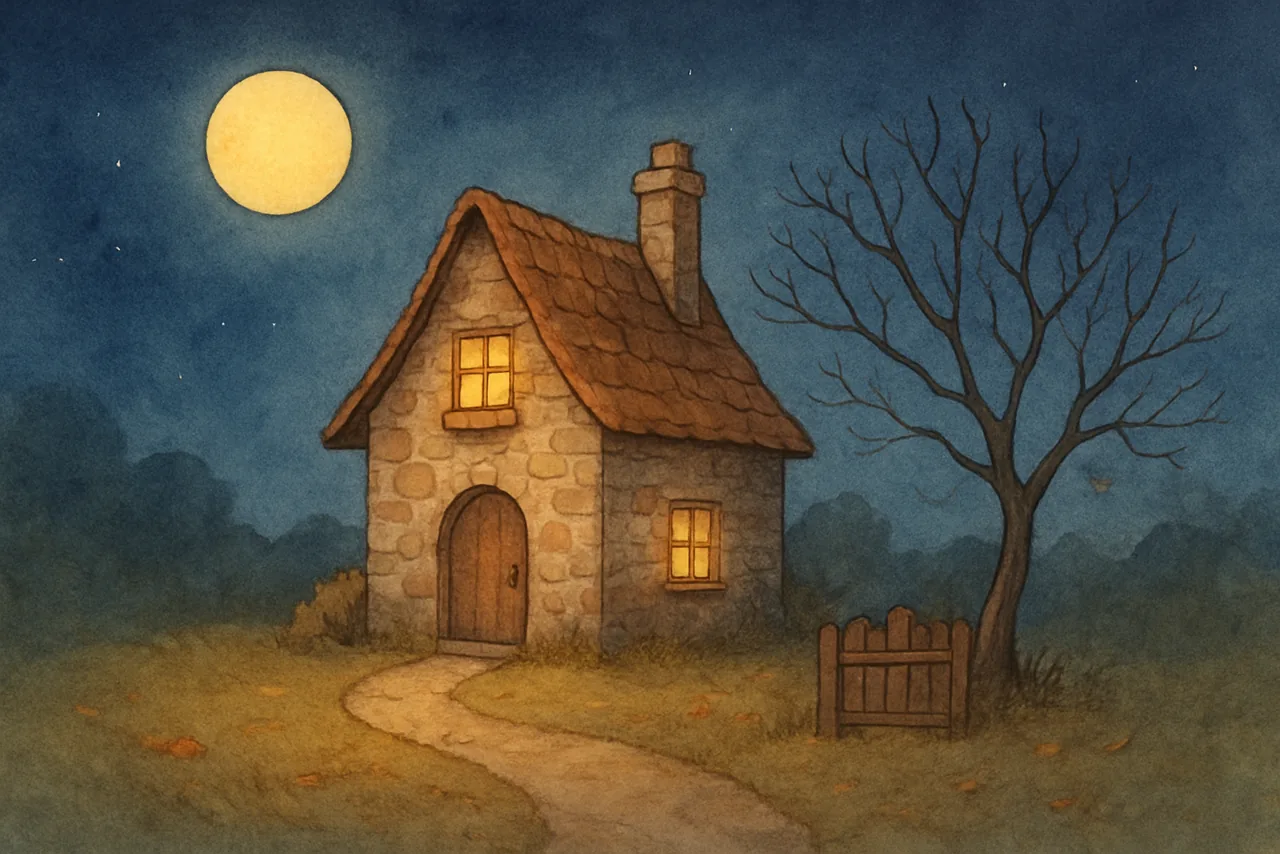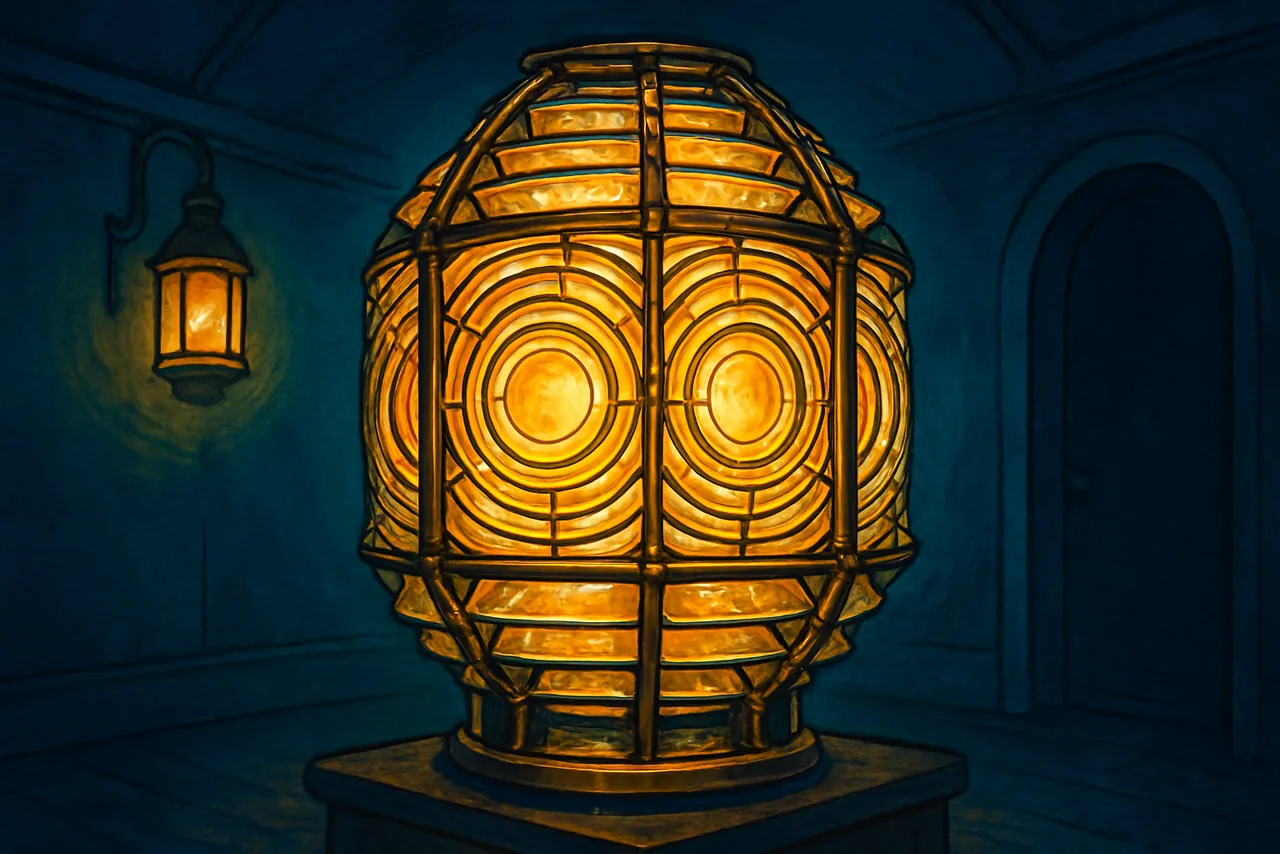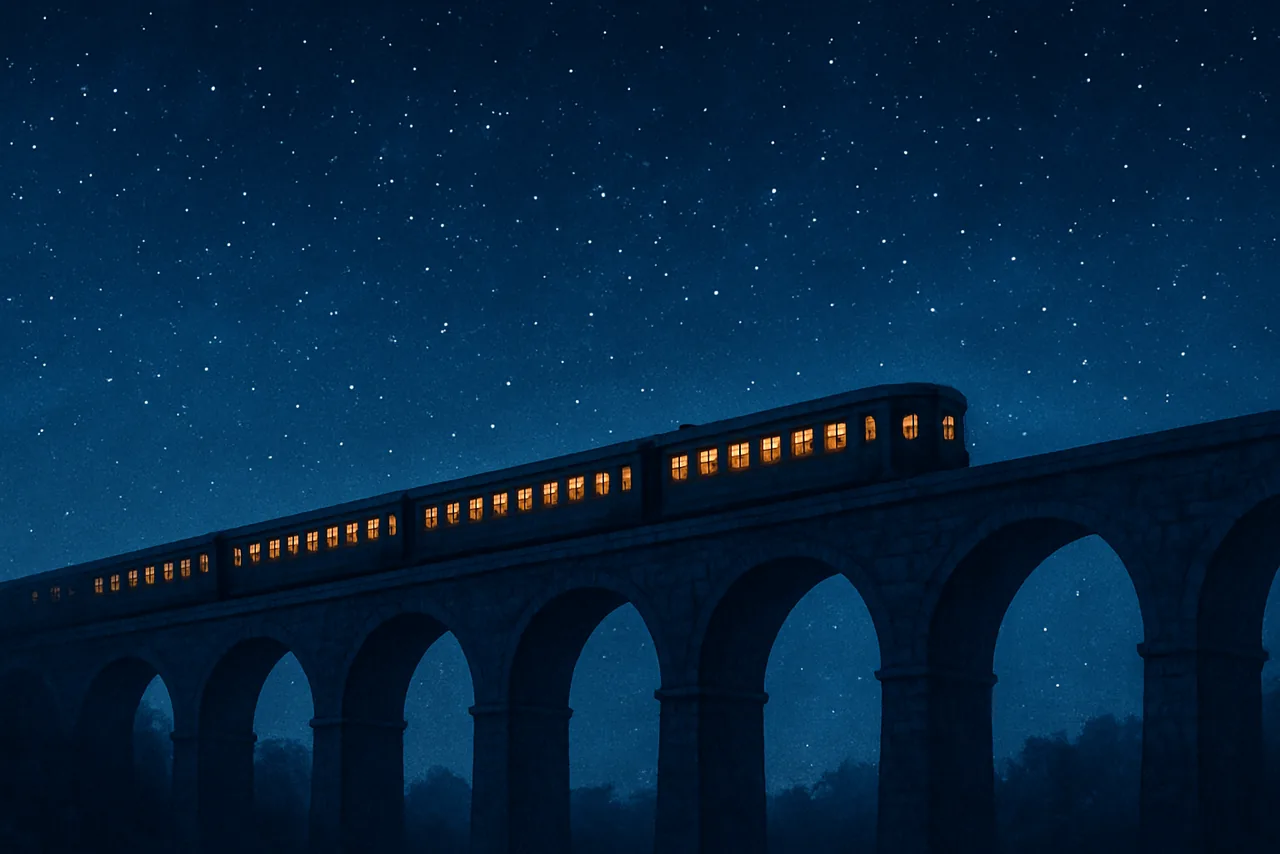
The 3:11 does not appear on any timetable.
Mira had checked all of them: the paper one screwed to the wall of the station café, the laminated one in the bus shelter, the website with its little rolling clock. Between the 23:40 freight and the 5:52 down to the coast, the line above Kerasia was supposed to be silent.
It was not. At eleven minutes past three, most nights, something went through — and it did not sound like the freight. The freight arrives the way a wardrobe falls down a staircase. This was quieter, and older: a long breath, a rocking, and then the whistle. Two long, one short.
She had been counting for a year. Two hundred and eighteen nights, tallied in the back of her maths book, where nobody looks.
Nobody else heard it. Her mother, who woke up if a moth changed its mind, did not hear it. So Mira stopped saying it out loud, and it joined the other things she had begun keeping in the part of herself she had opened last September, when they moved.
That was the year she lost the thing she could not name.
It was not the sea, although she missed the sea. It was not the old flat, or her old school, or Kyra Dora's dog, or the walk to the bakery that took four minutes if you ran. She could name all of those, and naming them helped, the way pressing on a bruise helps: it tells you exactly where it is.
The other thing had no edges at all. She only knew it was missing the way you know a word is missing — by the shape of the hole in the sentence.
On the two hundred and nineteenth night, she got dressed instead of listening.
The halt at Kerasia has not sold a ticket since before her mother was born. There is a platform with fennel growing out of it, a shelter with two walls, and a sign so rusted that only the K survives. Mira sat on the cold edge with her feet hanging over the rails and her jacket zipped to the chin, and at 3:09 she began to feel extremely twelve, and rather stupid.
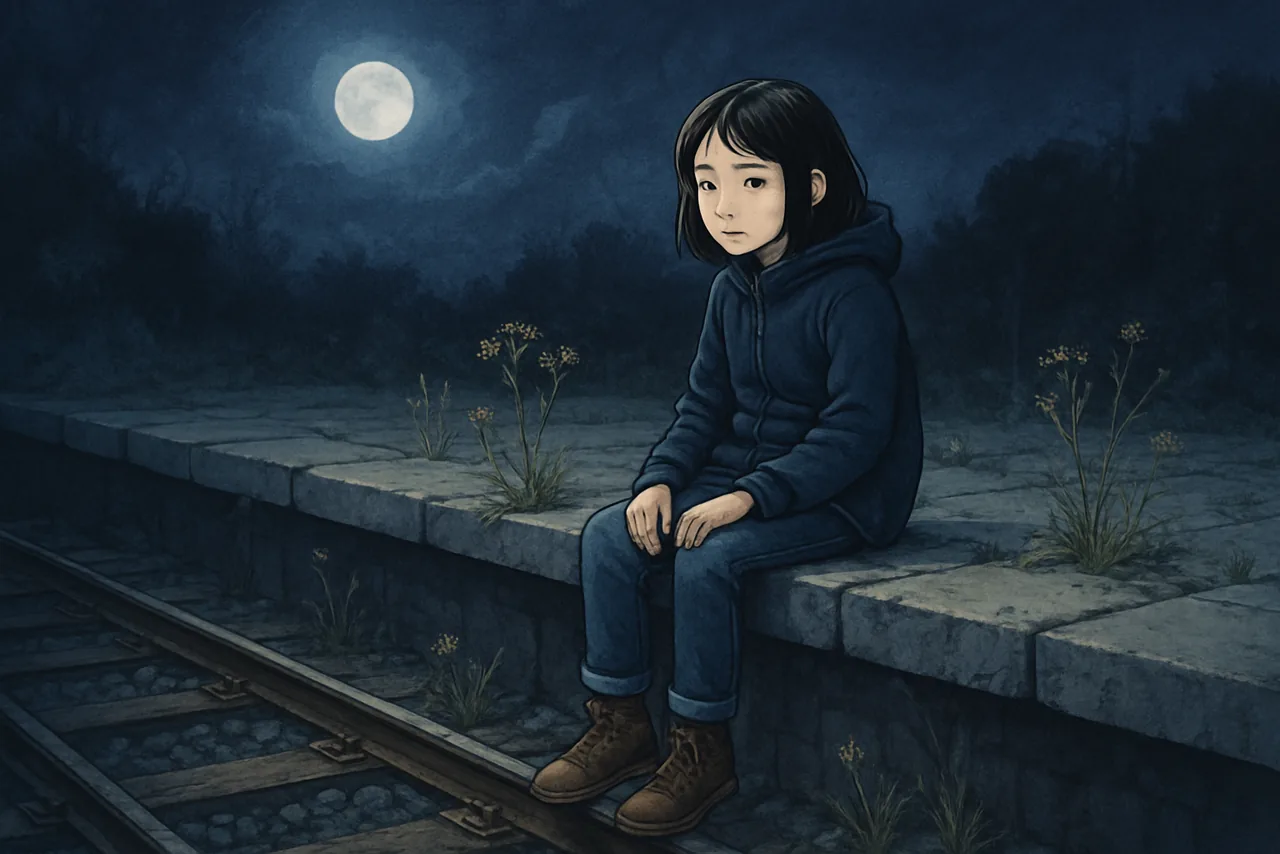
At 3:11 the rails started to hum.
The train came round the shoulder of the hill without any lights, which is not possible, and stopped, which is less possible still — the whole long dark length of it sighing and settling like a horse at the end of a road.
A door opened. A woman stepped down with a lantern in one hand and a ledger under her arm. Her coat was the colour of a dark plum and it went all the way to her boots.
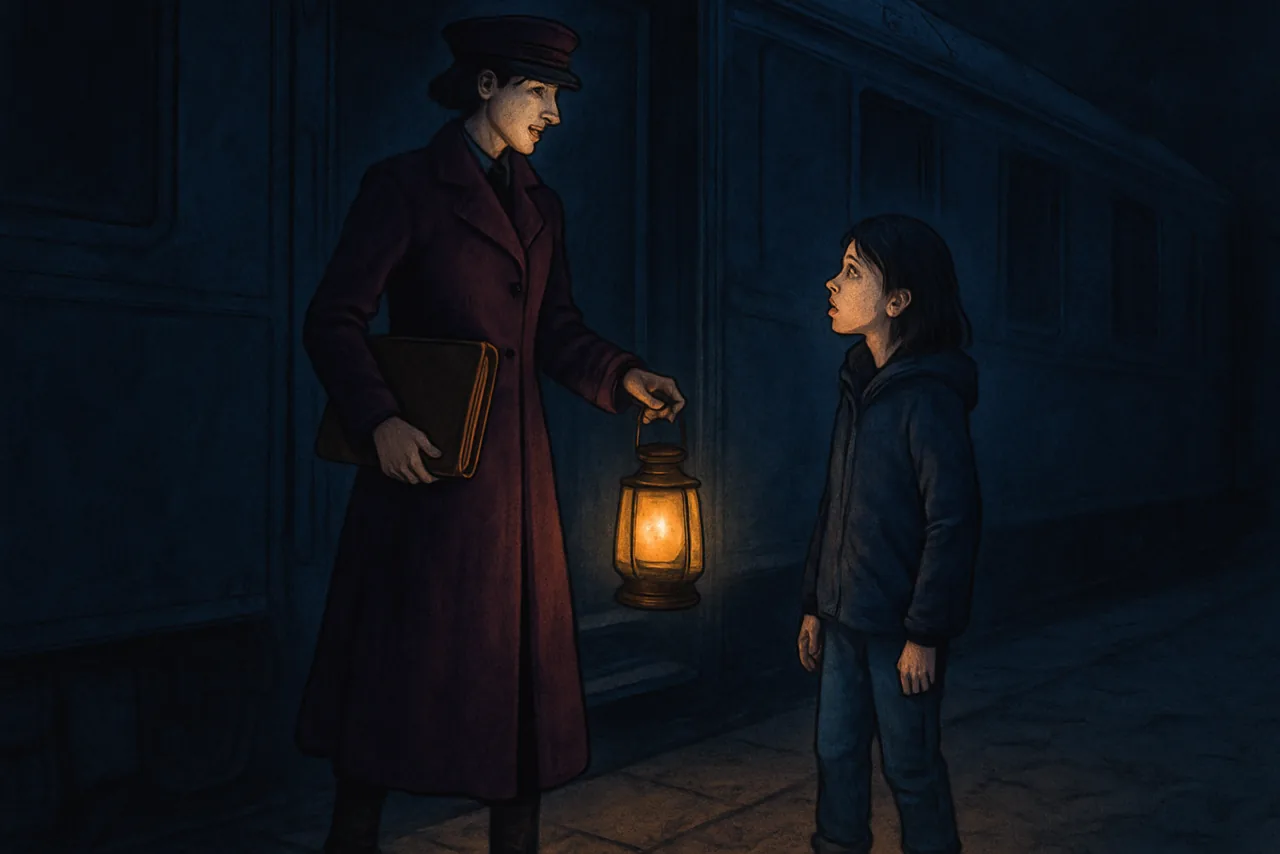
"You're the counter," she said.
Mira's voice came out very small. "Two hundred and eighteen."
"Two hundred and nineteen. You slept through the storm in February." The woman held up the lantern and looked at her the way a teacher looks at a sum that has come out right for the wrong reason. "We stop for people who've lost something they can't name. If you could name it, you'd have gone to lost property at the station like everybody else. Well? Are you coming up, or are you going to sit on that platform until you're cold enough to regret it?"
Inside, the train smelled of hot metal and old paper.
The first carriage was the dull one, the woman said, and she was right: single gloves, umbrellas, four thousand pencils, a bicycle. The second was better. It was full of jars, and each jar had a tune in it, half-remembered, going round and round; when Mira walked past they all leaned towards her and hummed a little louder, hoping.
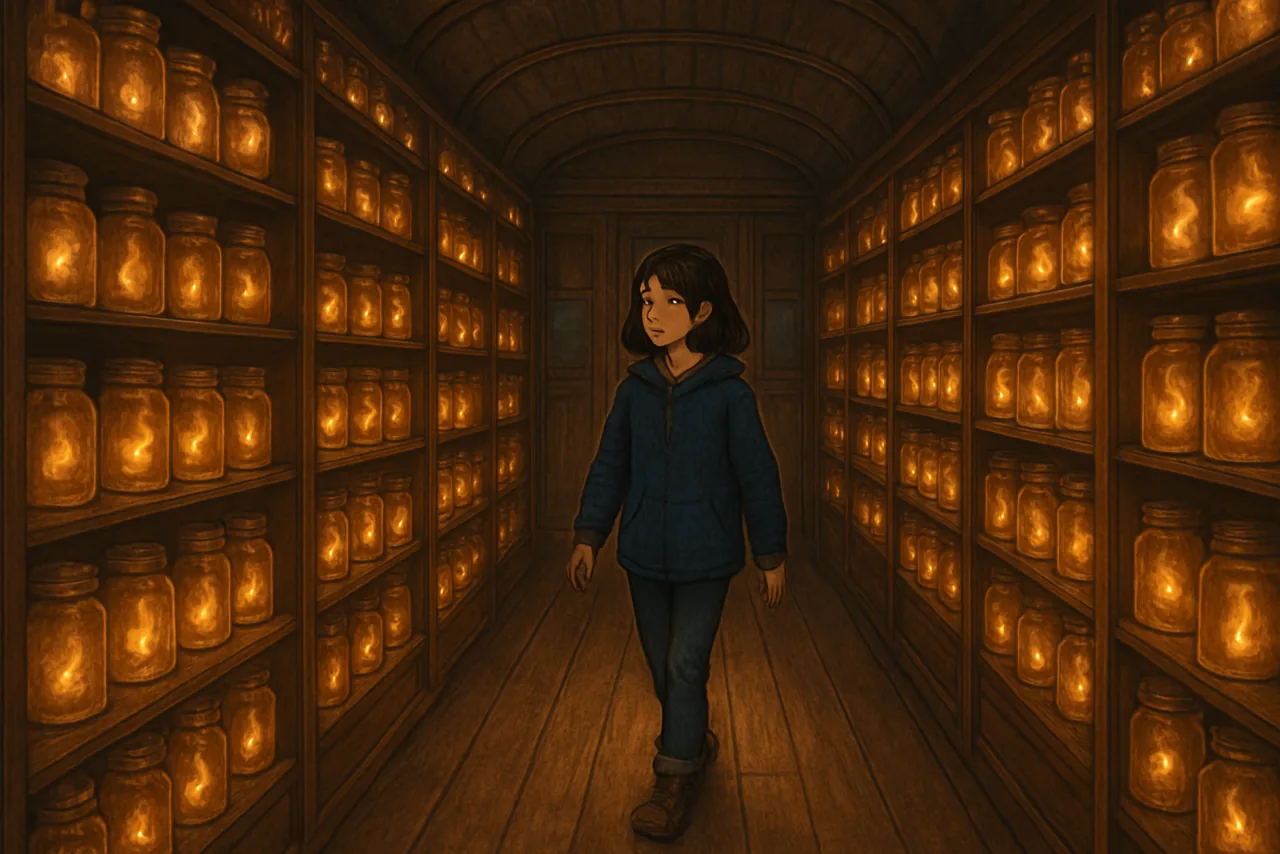
In the third carriage were the smells of houses that had been sold.
In the fourth were the sentences people had started and then abandoned somewhere in the middle, folded like shirts. Mira read the top one: I never told you that I —
"Don't," said the conductor. "You'll be here all night."
The fifth carriage held the names of people you loved and then, slowly, could not quite recall, and Mira did not go far into it, because it was very full, and the lantern light made the shelves go on and on.
"You may take back anything you can name," the conductor said. "That's the whole of the rule. Take your time. Most people take about four minutes."
Mira walked the length of the train twice.
She did not find the sea, or the flat, or the bakery — but she had known she would not; she could name those, and things you can name do not come here. She looked for something with her own handwriting on it. She looked on the floor. She got down on her knees at the end of the last carriage, where the shelves ran out, and found a run of shelving that was completely empty, and above it a hundred small brass label-holders with nothing in them at all.
"That's the part I wanted you to see," said the conductor, behind her.
"There's nothing there."
"No." The woman set the lantern down. "Those aren't lost things. That's the other kind — and every single one of you who gets on this train comes down here in the end and looks disappointed."
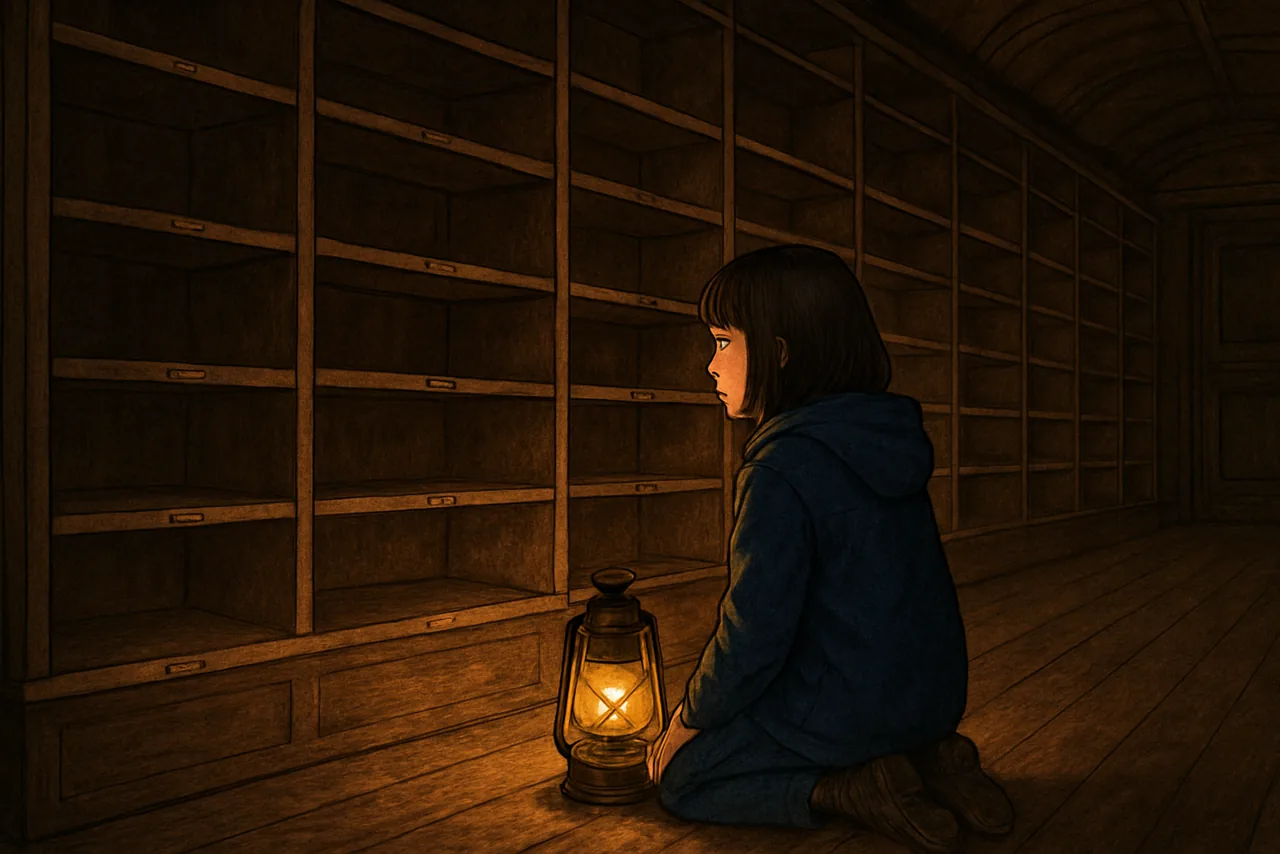
She opened the ledger. There were ruled lines, and dates, and hundreds of blank rows.
"Listen. You didn't lose it in the move. It was never packed, because it didn't exist yet." She tapped the empty shelf. "You had a home for eleven years and you did not have to build it — it was just there, like weather. Now you're twelve and you have to make one, and making takes longer than losing, and while it's being made it feels exactly, precisely like a hole. That is what you have been hearing at three in the morning. Not a train. A schedule."
Mira looked at the empty label-holders for a long time.
"So I can't have it back."
"You can't have back what hasn't happened," the conductor said. "But you can write down what you'll call it, and I'll keep the line open for a year." She held out a pen. "Most people can't write anything. It's not a failure. It only means you haven't got there yet."
Mira took the pen. She stood with the nib over the blank row and found that she could not write a single word, and — strangely, for the first time in a year — this did not feel like drowning. It felt like the moment in a long sum when you finally see which way it is going to go.
She gave the pen back.
"Next year, then," said the conductor, and did not look at all disappointed.
Mira came down the steps onto the fennel and the frost. The door closed. Two long, one short — and the train went up the valley without any lights, which is not possible, and the rails hummed for a while after it, the way a glass does when you take your finger off the rim.
She walked home in the blue part of the morning, before the sun cleared the ridge.
On the way she passed the corner where the road bends, which she knew. She passed number six, where the dog is called Sifis, which she knew. She passed the square, and knew, without checking, exactly which paving stone the sun would touch first.
None of that had been true in September.
At home she got back into bed with her boots still on and took out her maths book, and looked at the two hundred and nineteen tallies in the back of it.
Then she turned the page and started counting something else.